
Most engineers don’t get into this work for the career. They get into it for the puzzle. Why won’t the page load? How do a few lines of code end up running on millions of phones? The job starts as curiosity, and for a long time curiosity was enough. Write good code, ship it, fix what breaks, and the rest took care of itself.
That deal doesn’t hold anymore.
Walk through any team, and you’ll find engineers who write excellent code and are close to invisible outside their own standup. Meanwhile, the interview calls, the talks, the recognition tend to land with people who are easy to find. Not the loudest people. The findable ones.
That gap is what this book is about.
What a footprint actually is
When people hear “digital footprint,” they picture viral threads and follower counts. This book argues for something plainer. Your footprint is how your work shows up when someone goes looking. Your commits. The way you explain a hard idea in a blog post. A portfolio that says what you built instead of listing tools you touched. The questions you answer in a community. Put together, it’s the answer to one question: can a stranger figure out what you do and whether you’re any good at it.
None of that requires performing for an algorithm. The footprints worth having read as honest and a little understated.
Why it matters now
There’s a practical reason this counts more than it used to. Hiring is remote. Work is async. The first version of you a manager meets is usually a search result. Your next opportunity might trace back to something you wrote two years ago and forgot about. A resume is a snapshot you send when asked. A footprint works while you sleep, and it doesn’t expire the day you change jobs.
The book is written the way an engineer would write it. Less theory, more things you can do this weekend. It covers how to shape a GitHub profile that signals ownership instead of noise, how to write posts that show your thinking without tipping into hype, how to use LinkedIn and X on purpose instead of out of guilt, and how to stay discoverable on Google without giving up your privacy. It also spends real time on the mistakes, the ones that cost you trust before you’ve noticed.
One line sits at the center of it: “Write code for machines. Build a footprint for people.”
Engineers already do the hard part. You write design docs, review pull requests, explain trade-offs, leave good comments. This book asks you to point a little of that outward. Done that way, visibility stops feeling like self-promotion. It’s closer to documentation. You’re giving people the context to trust your work faster and learn from it.
The habit, not the hack
If you’re early in your career and can’t tell why certain peers get noticed, this is for you. If you’re mid-level and want the next role, or senior with real impact that nobody outside your org can see, same. It holds whether you’re at a startup, a large company, or building on your own. The footprint follows you everywhere, so you may as well shape it on purpose.
The honest part of the book is about pace. You don’t build this in a launch week. One repo. One post. One contribution. There’s no trick here, only the habit. Do it for a year and something shifts. People start knowing your name before you’ve met them. Your work starts moving without you pushing it. That’s leverage, and it’s the durable kind.
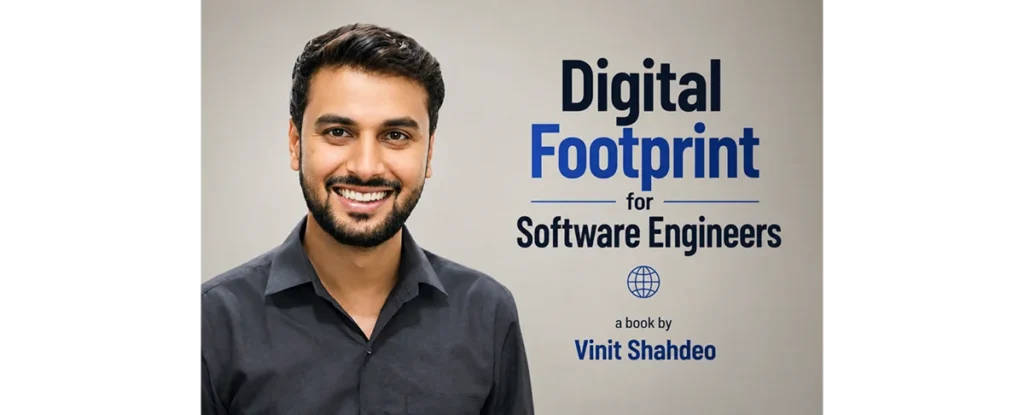
Vinit Shahdeo has spent years building and scaling backend systems across startups and larger companies, and mentoring engineers along the way. He kept running into the same thing: the people who struggled weren’t short on skill; they were short on visibility. Promotions and opportunities kept depending on how well someone’s work was understood beyond their immediate team. This book came out of that observation.
You don’t need to be loud. You don’t need to be everywhere. You don’t need to be famous. You need to be findable, credible, and deliberate about it. Your story is already online. This helps you tell it clearly, on your own terms.
Digital Footprint for Software Engineers by Vinit Shahdeo is now available on Amazon.
More Stories
Kyptec LifeStyle® 640 True Wireless Earbuds With ENC
Kyptec LifeStyle® 630 Bluetooth Headphones With Hybrid ANC
IBLPC: Online Legal Consultation and Lawyer Services